
In the Snow Globe: Dispatches from Mount Washington
By Marin MacDonald
Hey MWOBS community, my name is Marin MacDonald (she/her), and I am the Mount Washington Observatory/Mount Washington Avalanche Center intern this winter! Growing up in New England, I spent countless hours exploring the White Mountains- from skiing, to camping, to overnight trips up to the AMC huts. On these trips up north, I dragged my parents to the Obs museum in North Conway more times than I can count, with my favorite exhibits being the live summit conditions board and the 3D interactive map. Drawn to mountain living, I pursued my undergraduate degree in watershed science with a minor in GIS at Colorado State University (go rams!), where I am currently finishing my Masters under the same major. With my background being mainly in snow hydrology, experiencing the summit live-time during my favorite season is a dream come true!

All bundled up to weather the cold!
As of writing this, I am halfway into my first shift. Driving up the snow cat on my first day was like entering into a recently shook snow globe- blowing snow and freezing fog fully obscured the views from the summit and at times we could barely see to the edge of the observation deck! However, the weather finally broke this morning, leading to a stunning sunrise which was viewable during my morning walkthrough of the building. With visibility at roughly 120 miles, we could just make out the Atlantic to our East- so cool!

Sunrise from the weather room (photo taken facing west).
From braving 110mph wind gusts to collecting measurements on the deck, to producing forecasts, to conning Nimbus into liking you (pro tip: treats and a down blanket will do the trick!), my first few days at the summit have been packed with all sorts of learning moments. The wind really is its own beast up here!

Clear skies mean its time to break out the sling psychrometer.
In addition to learning more about meteorology and forecasting, I can’t wait to dive into my research project, which is focused on assessing the solid-to-liquid ratio (SLR) of frozen precipitation on the summit. Determining just how much water is stored in a snowpack can be beneficial for understanding climatic, recreational, and safety conditions (especially when it comes to avalanche risk), which as an avid skier and scientific researcher (aka a proclaimed snow enthusiast or nerd, depending on how you look at it), is the perfect project.
Thanks for reading, and see ya next time!
-Marin
My Fear of Weather Became a Love of Meteorology
My Fear of Weather Became a Love of Meteorology By Kaitlin Farrell Hello! My name is Kaitlin Farrell. I am one of the fall summit interns here at Mount Washington Observatory. I recently graduated
Ascending with High Winds
Ascending with High Winds By Alonso Lopez Hi! I am Alonso Lopez, one of four interns at Mount Washington Observatory from August to December, 2026. I was born and raised in the Dallas-Fort Worth
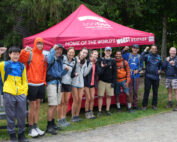
26th Annual Seek the Peak Recap
26th Annual Seek the Peak Recap By Drew Bush Members of the "Peak Potential" team gather at Pinkham Notch before hiking Mount Washington for the 26th Annual Seek the Peak. View more images. We’ve had