
Alpine Foliage
2019-06-24 09:00:31.000 – Benjamin Charles, Summit Intern
Here at Mount Washington we are home of the world’s worst weather, where we experience some of the harshest winters in the world with the combination of hurricane force winds of 100 mph and higher four out of the seven days of the week and extreme icing. It is hard to believe any wildlife at all would be able to withstand such extreme climatic conditions. The alpine zone found above tree line is one of the few living things able to survive every year. The alpine zone consists of various alpine foliage and flowers that are very beautiful, but also provide scientists an opportunity to study and learn more about living organism that are capable of surviving such extreme climatic conditions.
Due to the short summers on the mountain alpine foliage are typically very small, although when they do blossom they change the landscape from white Rocky Mountains to beautiful green mountain sides with colorful rainbow like patches of flowers. Due to the short summer alpine foliage will go dormant during the winter, meaning that what is typically seen above ground foliage will die back however the plants are still alive in the roots and core of the plant waiting for the winter thaw, to blossom. Although these plants are able to survive some of the harshest weather in the world, they find it difficult to survive foot traffic. So if you are out hiking this summer in the alpine zone please stay on the trail at a all times to preserve these delicate ecosystems.
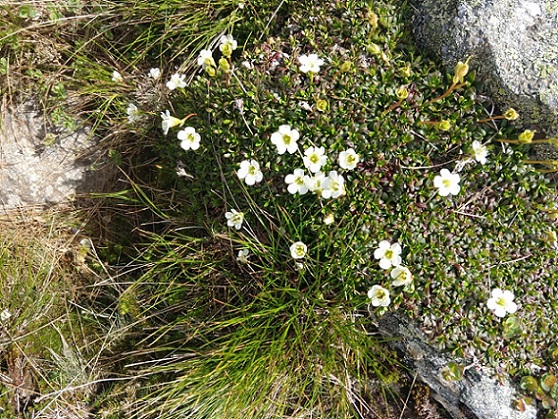
The picture above is a flower known as Diapensia Lappnica found along the Boott Spur trail on Mount Washington. After doing some background research I found Diapensia Lappnica is a common flower here and typically grows only a few inches above the ground, from June through July.
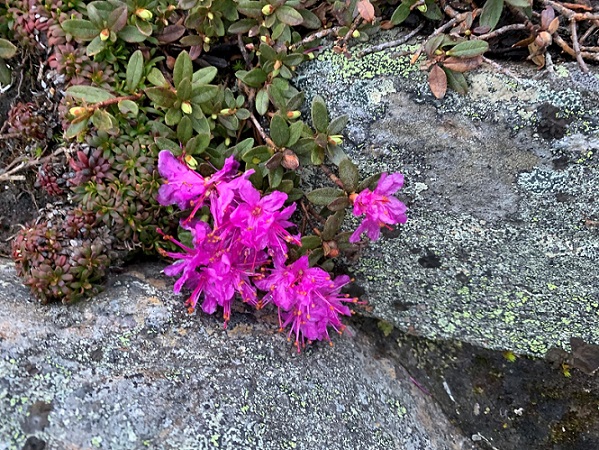
This is a picture of Rhododendron Lapponicum, on the Alpine Garden trail on Mount Washington taken by yours truly. Rhododendron Lapponicum often are small at about four to 8 inches tall and grows from May through July.
Benjamin Charles, Summit Intern
My Fear of Weather Became a Love of Meteorology
My Fear of Weather Became a Love of Meteorology By Kaitlin Farrell Hello! My name is Kaitlin Farrell. I am one of the fall summit interns here at Mount Washington Observatory. I recently graduated
Ascending with High Winds
Ascending with High Winds By Alonso Lopez Hi! I am Alonso Lopez, one of four interns at Mount Washington Observatory from August to December, 2026. I was born and raised in the Dallas-Fort Worth
26th Annual Seek the Peak Recap
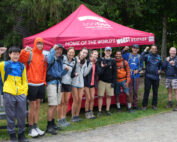
26th Annual Seek the Peak Recap By Drew Bush Members of the "Peak Potential" team gather at Pinkham Notch before hiking Mount Washington for the 26th Annual Seek the Peak. View more images. We’ve had