
Cirrus Clouds
2011-11-02 20:01:54.000 – Kevin Cronin, Summit Intern
Cirrus Clouds
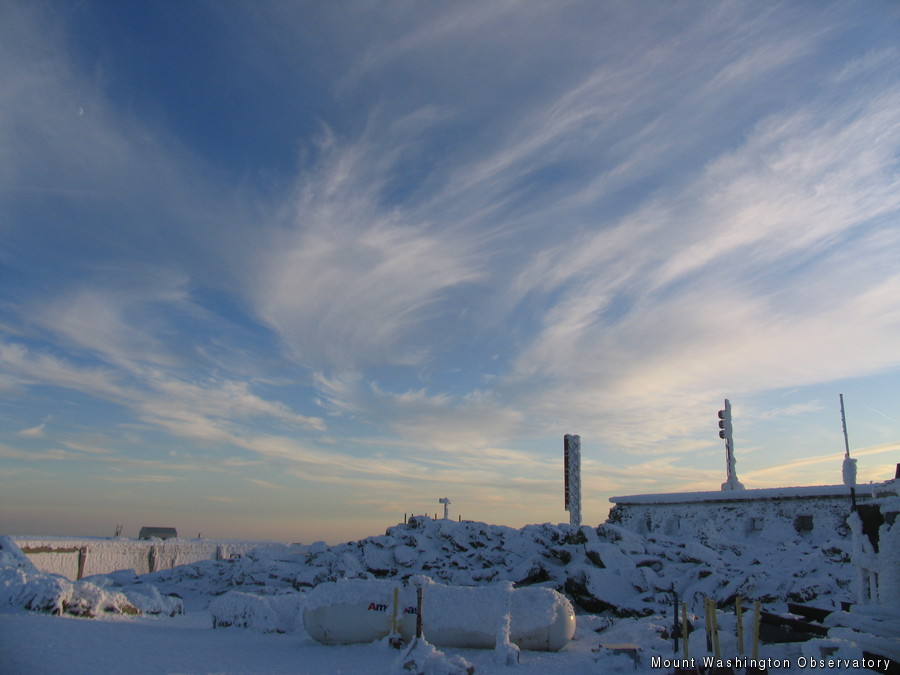
As I headed out to the observatory deck two hours before sunset, I noticed the sky was full of cirrus clouds. The picture below provides a great representation of what cirrus clouds look like. You can usually identify them from the wispy, hair-like signatures they make in the sky. They are not formed from a collection of water droplets such as fair weather cumulus clouds or stratus clouds. They are actually a collection of ice crystals. The ice crystals form from deposition, which is a transition of a substance from a gas to a solid. After the ice crystals form, they fall until they sublimate back into the air giving the appearance of fall streaks. Fall streaks are dictated by the direction and intensity of the wind at the level of the atmosphere the cloud is located.
Cirrus clouds are usually around 16,000 feet and can even extend up to 20,000 feet in tropical regions. These heights are well above other clouds made of water droplets. This makes them easy to spot on a clear day due to their unique hair-like signatures. Since they are distinguishable from many other clouds, it makes it simple for anyone to identify them in the sky and determine the general height of the clouds. However, low level clouds could obscure the observers view of them even if they are present above. Fortunately for me only cirrus clouds painted the sky today.
Kevin Cronin, Summit Intern
From One Mountain to the Next
From One Mountain to the Next By Ellie Derry Hi everyone! My name is Ellie Derry and I am one of the fall 2026 interns at the Observatory. I’m super excited to be here
Mountains and Meteorology: What More Could a Girl Need?
Mountains and Meteorology: What More Could a Girl Need? By Emily Grainger Hi everyone! My name is Emily Grainger, and I am one of this fall’s Summit Interns atop Mount Washington! I’m from Orlando,
My Fear of Weather Became a Love of Meteorology
My Fear of Weather Became a Love of Meteorology By Kaitlin Farrell Hello! My name is Kaitlin Farrell. I am one of the fall summit interns here at Mount Washington Observatory. I recently graduated