
K-H Cloud Siting
2009-02-14 15:10:55.000 – Ali Boris, Summit Intern

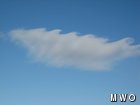
K-H Cloud
A ship without a mast? A spiky fish? Or just a super-rare cloud formation high over the summit of Mount Washington?
I had the great pleasure of walking off of the mountain last shift change with one of our fantastic volunteers, Al Lake. We strapped on some crampons and set off on one of the most beautiful, clear, and warm days I have seen up here. The sky was blue and the snow was settled. As we made our way down past the site of the old halfway stage office (aka, Halfway House), we noticed an exquisitely defined specimen of a wave cloud. We snapped a picture and marveled, then enjoyed another hour or so to the bottom (beating the snow cat).
It turns out that this cloud, called a Kelvin-Helmoltz, billows, shear-gravity, or KHI cloud, is pretty rare (for us at least) and deserves even more than facebook profile picture status. It’s caused by Kelvin-Helmoltz instability, occurring when two layers of stacked air are move in opposite directions and/or at different speeds. In this particular example, Ryan has explained to me that if the cloud had shown some curls on the underside, that would have indicated that the air masses were moving in opposing directions.For now, with winds gusting over the summit just over 100 mph, we’ll have to wait a while to see another one of these clouds… Soon enough, though, the storms will give way to more amazing mountain meteorological phenomena.
Ali Boris, Summit Intern
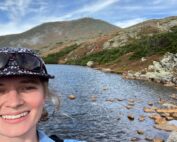
From One Mountain to the Next
From One Mountain to the Next By Ellie Derry Hi everyone! My name is Ellie Derry and I am one of the fall 2026 interns at the Observatory. I’m super excited to be here
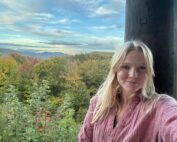
Mountains and Meteorology: What More Could a Girl Need?
Mountains and Meteorology: What More Could a Girl Need? By Emily Grainger Hi everyone! My name is Emily Grainger, and I am one of this fall’s Summit Interns atop Mount Washington! I’m from Orlando,
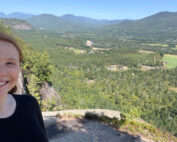
My Fear of Weather Became a Love of Meteorology
My Fear of Weather Became a Love of Meteorology By Kaitlin Farrell Hello! My name is Kaitlin Farrell. I am one of the fall summit interns here at Mount Washington Observatory. I recently graduated