
Climate Change in the Classroom
2019-08-16 18:48:18.000 – Ian Bailey, Weather Observer/Education Specialist
This weekend, we will be conducting our first ever Climate Change Professional Development program! We have invited 8 teachers from multiple different schools and classrooms to join us on the summit to learn about Climate Change and develop tools/resources they can use to present the topic in their own classroom. Our hope is that we’ll be able to effectively communicate a very large, very complex topic (one that could be broken up into 3 semesters worth of material) and help teachers feel a bit more comfortable when discussing it with their students.
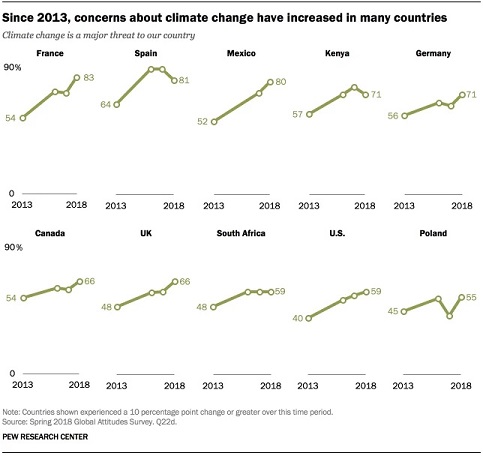
Studies and polls conducted by organizations such as the Pew Research Center have shown that public perspective on the topic of Climate Change has, itself, changed drastically over the last 5 years. As the graphic above shows, many of these countries have seen a general increase in concern/awareness about of changing climate by as much as 10% or more! On top of that, over 20 major countries around the globe have classified the issue as a major threat; something that absolutely needs to be addressed for the betterment of our planet and humanity.
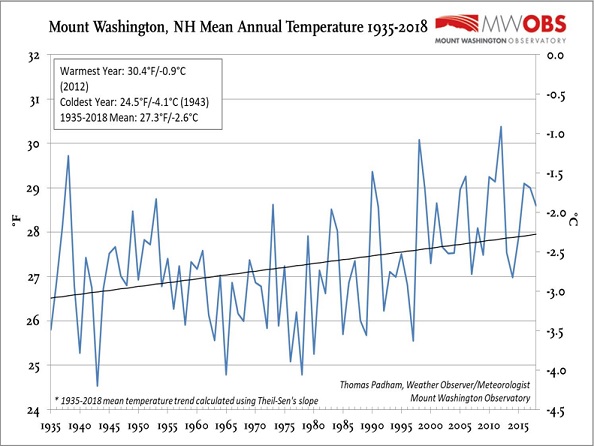
Here at the Observatory, we too have taken note of the effects of climate change that are reflected in our own data and observations. Our average annual temperatures are warming (albeit at a slower rate by comparison), and our winter season seems to be shrinking! Because this is something we research, study and understand well, and because we have the data to show our findings, we wanted to share our knowledge with those who devote their lives to teaching the new and upcoming generations so that they can share it in turn.
It is very exciting to be involved in teaching/leading a new educational program. And it’s going to be a jam-packed weekend! Once the teachers are here and have settled in, we’ll be looking at the difference between weather and climate and different climate regions across the globe, we’ll be discussing the multitude of sources and factors contributing to climate change, and we’ll even take a look at climate assessments and reports conducted over recent years as well as public outlook and response to these issues. Additionally, we’ve developed a plethora of resources, experiments and activities that these teachers will be able to take back to their classrooms to run on their own! Overall, it’s going to be a great weekend for education and science, and I am very much looking forward to it!
We conduct Edutrip and Professional Development programs like this throughout the year, where participants venture up to the summit, stay overnight and learn about a wide variety of fascinating, science/weather-related topics. If you are interested in potentially joining us for one of these adventures, you can learn about them and sign up for them at:
https://www.mountwashington.org/experience-the-weather/summit-adventures/
You should definitely look into these awesome educational experiences! And hopefully we’ll see you up here soon!
Ian Bailey, Weather Observer/Education Specialist
My Fear of Weather Became a Love of Meteorology
My Fear of Weather Became a Love of Meteorology By Kaitlin Farrell Hello! My name is Kaitlin Farrell. I am one of the fall summit interns here at Mount Washington Observatory. I recently graduated
Ascending with High Winds
Ascending with High Winds By Alonso Lopez Hi! I am Alonso Lopez, one of four interns at Mount Washington Observatory from August to December, 2026. I was born and raised in the Dallas-Fort Worth
26th Annual Seek the Peak Recap
26th Annual Seek the Peak Recap By Drew Bush Members of the "Peak Potential" team gather at Pinkham Notch before hiking Mount Washington for the 26th Annual Seek the Peak. View more images. We’ve had