
Conducting Research at the Home of the World’s Worst Weather
2017-02-14 16:40:36.000 – Eric P. Kelsey, Ph.D., Director of Research
Every January, an undergraduate meteorology student from Plymouth State University is selected to be an intern at MWO for two weeks during the University’s winter break. This opportunity, which helps attract some of the best graduating high school students to matriculate in PSU’s renowned Meteorology program, provides a unique winter experience at the “Home of the World’s Worst Weather.” Interns experience and learn about mountain meteorology, make forecasts, assist Observers with a sundry of tasks, and perform a focused research project under the advisement of Dr. Eric Kelsey, MWO Director of Research and PSU Research Assistant Professor in Meteorology.
The internship provides PSU students new skills and experiences that many employers in the field of atmospheric science are seeking.
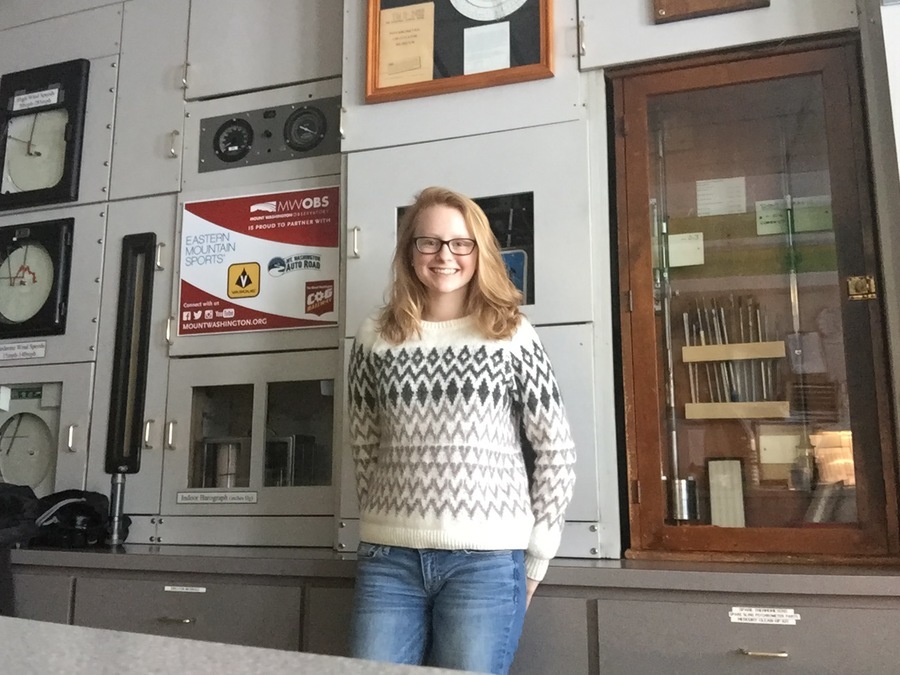
This past January, PSU junior Meghan Wells was selected to be the January intern. She was thrilled to live on the summit January 4-17 shadowing the Observers, shoveling snow, deicing instruments, and making weather forecasts. Meghan experienced an incredible range of weather conditions, from near record warm temperatures of 36F to -23F, wind chill temperatures below -50F, feet of rime ice, and six days of winds exceeding 100 mph. Meghan really enjoyed the tight-knit community of the Observers, volunteers, and periodic guests on Edutrips and day trips.
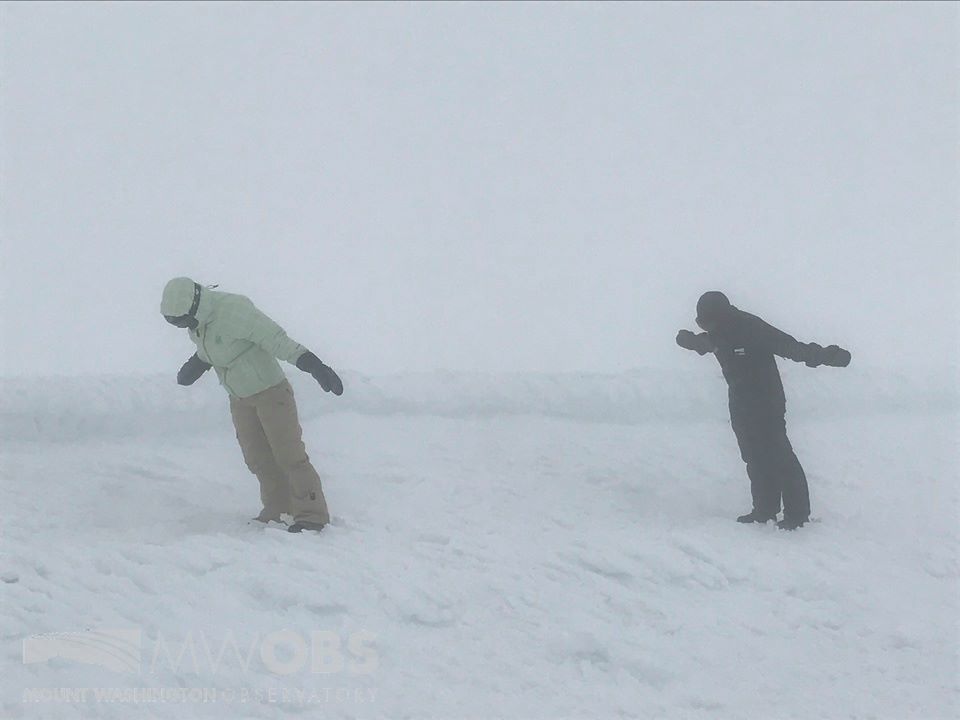
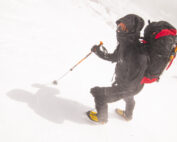
Meghan and Weather Observer Taylor leaning in hurricane force winds
Meghan’s research project involved calculating the lapse rates (change in temperature with elevation) from the Cog Railway base and Auto Road base to the summit. Larger lapse rates are associated with a well-mixed atmosphere between the valleys and summit, and lower lapse rates indicate stable air and the summit being in a different air mass than the boundary layer in the valleys. Her results confirmed our hypotheses: lapse rates are higher during the daytime and summer (when solar heating is strongest), and lower at night and in the winter (when solar heating is lowest). The results of this research support the larger boundary layer research being performed by Dr. Eric Kelsey to understand why the summit of Mount Washington is warming more slowly than the lower elevations of the Northeastern US.
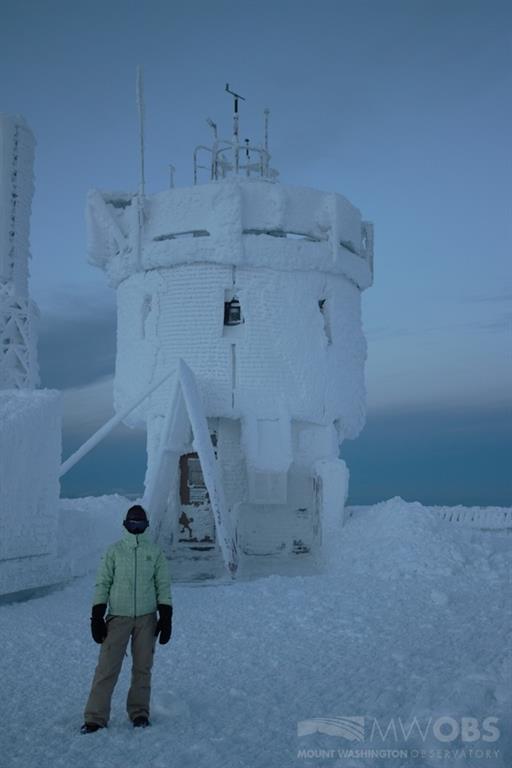 On the observation deck
Eric P. Kelsey, Ph.D., Director of Research
Seek the Peak 2026: New Adventures, Rooted in Tradition
Seek the Peak 2026: New Adventures, Rooted in Tradition By MWOBS Staff Seek the Peak is Mount Washington Observatory's largest annual fundraiser, and for 26 years it's brought together hikers, adventurers, and people who
What “Prepared” Really Means in the White Mountains
What “Prepared” Really Means in the White Mountains Early Spring in the Whites: The Most Honest Season By Andrew Harris, Burgeon Outdoor If you’ve spent any time in New Hampshire’s White Mountains in March,
March on Mount Washington
March on Mount Washington By Ryan Knapp Looking towards Mt. Madison at sunset on March 21, 2026. The calendar has spoken: Friday, 20 March 2026, marked the first day of astronomical spring.