
Never Out of the Woods
2016-05-29 16:37:45.000 – Tim Greene, Summit Intern
Despite Tropical Storm Bonnie being the hot-button topic of most New England meteorologists’ concern this weekend, it can be said with fairly high confidence that the brunt of the storm will pass well south of us here in the White Mountains. Even the northernmost tracks forecast by the EPS and GEFS (ensemble models that run dozens of slight perturbations on the one initialized model, creating a series of outputs covering the whole spectrum of what could happen) keep the system roughly 100 miles offshore. In fact, mean sea level pressure is forecast to remain well above 1000 millibars (which roughly equates to 800 mb at the summit of Mount Washington) through much of New England. Large portions of the Carolinas and Virginia are forecast to get upwards of 3 inches of rain, though the heaviest rainfall is expected to stay offshore (in excess of 8 inches).
But what would happen if Bonnie plowed through the White Mountains? Moreover, what would happen if instead of Tropical Storm Bonnie it was Hurricane Bonnie that had Mount Washington in her crosshairs? Well, that is exactly what happened on August 31, 1954, except instead of Bonnie, it was Hurricane Carol that was the culprit. Southern New England saw sustained winds in excess of 100 mph and the Observatory gusted up to 142. More noteworthy though was the tropical rainfall Mount Washington saw; over 3 inches of it. The infamous New England hurricane known only as “38” (common practice before 1954, when hurricanes were not named as they are today; they were most commonly named after the area they most affected) ravaged New England and dumped 5.45 inches of rain over the White Mountains to go along with 120 mph sustained winds and gusts of up to 160 mph. The observer comment from September 22, 1938 reads in part: “Violent winds continued with lessening force throughout the night. Many trees blown down on all sides of mountains. Road closed by fallen trees.” If such an event were to occur today, a lot more life and property would be placed in harm’s way. As you can probably imagine, all the rain that falls on the White Mountains would run downslope and accumulate in the valleys thus causing major flash flooding. At 1,173 square miles, the amount of water that falls on the entirety of White Mountain National Forest during a 1 inch rain event is 20 billion gallons. So another 5.45 inch event would yield a total of over 111 billion gallons of water (enough to fill the Empire State Building over 4 times) being dumped over the area in a short period of time.
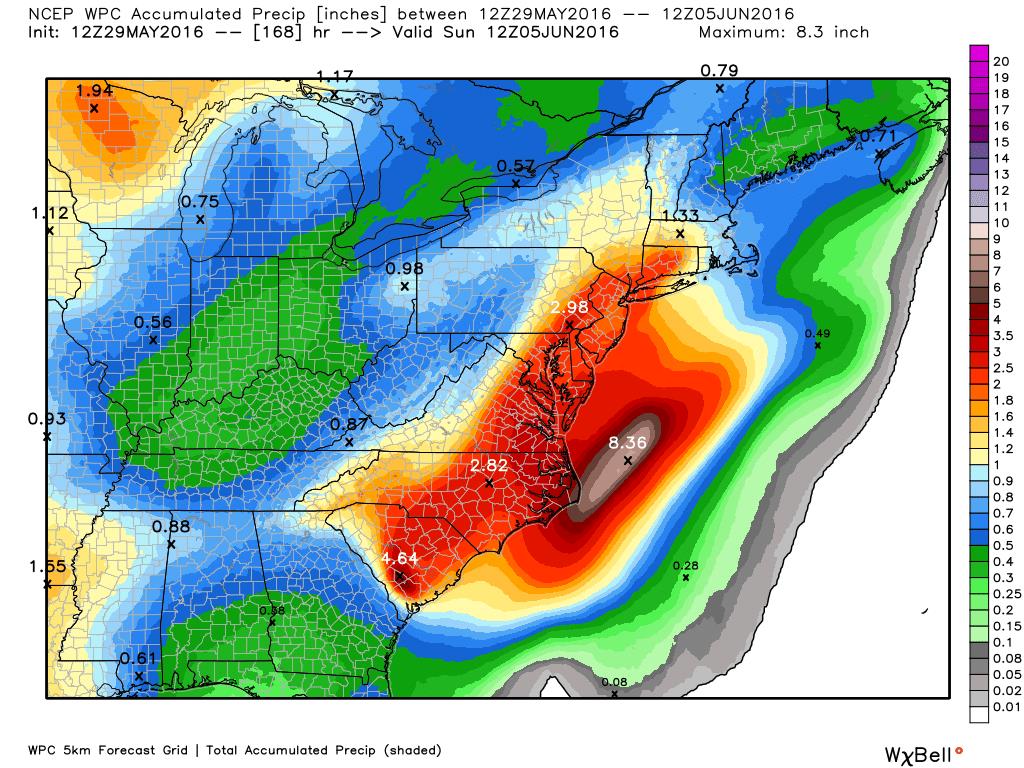
Forecast rainfall associated with Tropical Storm Bonnie
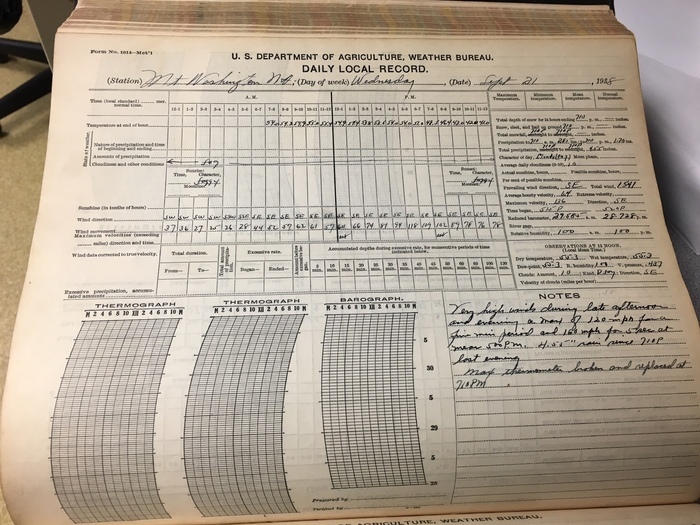
Tim Greene, Summit Intern

Seek the Peak 2026: New Adventures, Rooted in Tradition
Seek the Peak 2026: New Adventures, Rooted in Tradition By MWOBS Staff Seek the Peak is Mount Washington Observatory's largest annual fundraiser, and for 26 years it's brought together hikers, adventurers, and people who

What “Prepared” Really Means in the White Mountains
What “Prepared” Really Means in the White Mountains Early Spring in the Whites: The Most Honest Season By Andrew Harris, Burgeon Outdoor If you’ve spent any time in New Hampshire’s White Mountains in March,
March on Mount Washington
March on Mount Washington By Ryan Knapp Looking towards Mt. Madison at sunset on March 21, 2026. The calendar has spoken: Friday, 20 March 2026, marked the first day of astronomical spring.