
Research at 6288′
2013-06-13 20:50:05.000 – Luke Davis, Summit Intern

NULL
From record highs, to rime icing conditions, to booming thunderstorms, it’s been exciting up here during my first couple shifts. And the work load that’s been ramping up is making things challenging too.
For the past three days I’ve been sifting through piles of data, working on the intern research project assigned to myself and intern Alex Carne. Our objective is to use information on meteorological phenomena recorded daily, over the course of several winters, at the base of Tuckerman’s Ravine, Huntington’s Ravine, and here on the summit, to establish a predictable relationship between conditions in the ravines and conditions on the mountain. This is a challenging task, as the immense complexity of weather over mountainous regions, due to such effects as turbulence and forced uplift, make it difficult to isolate any kind of observable relationship.
Despite the hard work, it’s awesome to get the chance to delve into ‘pure research’ — trying to understand something for the sake of understanding it — while being able to directly help mankind. Based on this research, we hope to provide the information necessary for developing a model that may predict the conditions which create a high danger for slab avalanches. This is the kind of avalanche that is extremely dangerous to those enjoying outdoor winter sports; they are caused when a heavy, dense layer of snow collects on top of a weaker, less dense layer until its weight causes the weak layer to collapse, sending massive amounts of snow down the slope. Therefore, not only are we exploring how air moves in these regions, and how it transfers its heat, but also the science of ice crystals, with the ultimate goal of helping protect those who frequent avalanche-prone regions.
On top of all this research and my other intern duties, I’ve been able to record several weather observations and get experience with basic forecasting models. I’ve even had the chance to form my own weather outlooks from these models. I can’t think of anywhere else that I’d be able to try out two of the top things I’m interested in turning into a career — research in atmospheric science, and weather forecasting — all while on top of a mountain! By the end of the summer, I’m sure I’ll get enough perspective and experience to help me figure out which direction I should take, all the while improving my hobby in photography.
Luke Davis, Summit Intern
Seek the Peak 2026: New Adventures, Rooted in Tradition
Seek the Peak 2026: New Adventures, Rooted in Tradition By MWOBS Staff Seek the Peak is Mount Washington Observatory's largest annual fundraiser, and for 26 years it's brought together hikers, adventurers, and people who
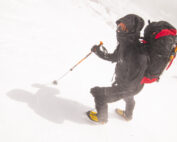
What “Prepared” Really Means in the White Mountains
What “Prepared” Really Means in the White Mountains Early Spring in the Whites: The Most Honest Season By Andrew Harris, Burgeon Outdoor If you’ve spent any time in New Hampshire’s White Mountains in March,
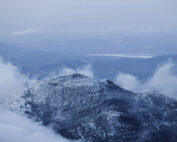
March on Mount Washington
March on Mount Washington By Ryan Knapp Looking towards Mt. Madison at sunset on March 21, 2026. The calendar has spoken: Friday, 20 March 2026, marked the first day of astronomical spring.