
The Climb to the Clouds
2017-06-26 11:29:47.000 – Margaret Jividen, Summit Intern
There are many things people associate with Mount Washington: terrible weather, the great views, and science. Not only does the summit claim the title of tallest point in New England, but the mountain is also home to the country’s oldest auto race: the Mount Washington Hillclimb, also known as “The Climb to the Clouds.” In less than two weeks, this historic race will return, being held by the Mount Washington Auto Road and sponsored by Subaru.

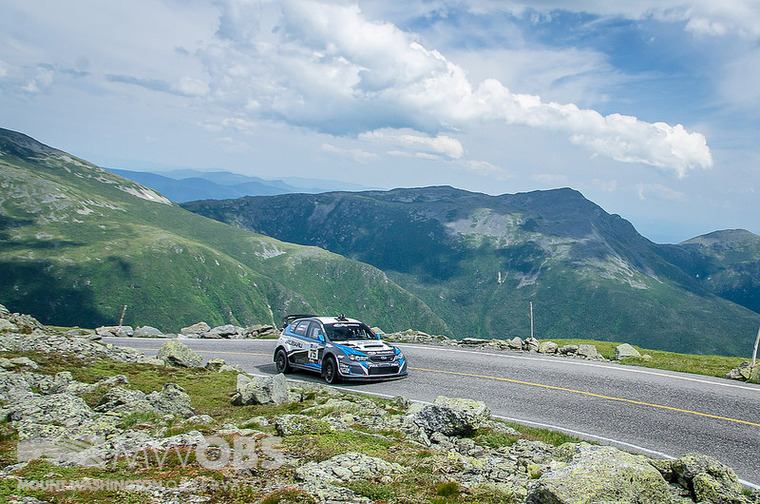
Figure 1: Kimberly “Slim” Bryant, participates in the 2014 Climb to the Clouds
The Auto Road holds a claim to fame as the United States’ first man-made tourist attraction, with the construction of the road being finished in 1861. At the time, adventurous visitors from all parts of the country came by horse and carriage to see the summit’s amazing views. It wasn’t until 1899 that the first automobile (“horseless carriage”) made its way to the top, driven by F. O. Stanley (co-owner of the Stanley Steamer motor brand) with his wife Flora as passenger.
For many visitors today, the jaunt up the Auto Road is exciting, nerve-wracking, and the most adventurous part of their visit in the White Mountains. From the tree-lined road at the beginning, to the 18% grade of Raymond Grade, to the heart pounding drop offs, many claim to have white knuckles as they climb the nation’s oldest manmade attraction. This is the same path that the Stanley’s braved with their steam powered automobile. Flora penned later on “We went on, and up, up, still up, the continuous climbing being varied only by a steepness so excessive that we felt a sickening anxiety lest each brilliant dash should be our last.” Despite her worries, the Stanleys safely made history that August day, and cars have been climbing, chugging, and twisting up toward the summit ever since.
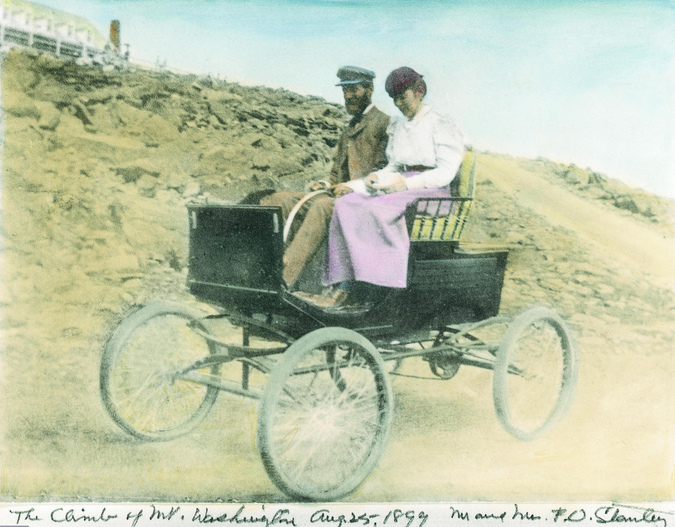
In 1902, the first gasoline powered automobile made the climb, and in 1904 the Mount Washington Hillclimb was born. The first race was extremely slow compared to today’s standards; the winner was Harry Harkness at 24 minutes and 37 seconds. For a comparison, the average drive up for Observatory staff is 30 minutes. Despite this, it was still an amazing feat, due to the novelty of the road and automobile technology. After all, Stanley’s historical climb took over two hours to maneuver. Harkness himself told the New York Times (Link: http://www.nytimes.com/2011/06/19/automobiles/19MOUNTAIN.html) “I won’t do it again, it is too dangerous. The road is rough and narrow and I nearly went over the cliff two or three times.”
The Hillclimb continued for a consecutive 57 years, beginning a hiatus after the 1961 race. By then, Harkness’s record had been broken multiple times, with the standing record in 1961 going to Bill Rutan in his Porsche-Volkswagon Special at 9 minutes, 13 seconds, finally breaking the 10 minute mark. The race returned in 1990, continuing again consecutively until 2001, with Frank Sprogl’s 1998 record of 6 minutes and 42.99 seconds standing.
The last two returns of the race have been dominated by David Higgins: in 2011, he broke Sprogl’s record with a shocking 6 minute, 11.4 second run. The last time The Climb to the Clouds occurred, in 2014, Higgin’s broke his own record with the now standing time of 6 minutes, 9.09 seconds.
Margaret Jividen, Summit Intern
From One Mountain to the Next
From One Mountain to the Next By Ellie Derry Hi everyone! My name is Ellie Derry and I am one of the fall 2026 interns at the Observatory. I’m super excited to be here
Mountains and Meteorology: What More Could a Girl Need?
Mountains and Meteorology: What More Could a Girl Need? By Emily Grainger Hi everyone! My name is Emily Grainger, and I am one of this fall’s Summit Interns atop Mount Washington! I’m from Orlando,
My Fear of Weather Became a Love of Meteorology
My Fear of Weather Became a Love of Meteorology By Kaitlin Farrell Hello! My name is Kaitlin Farrell. I am one of the fall summit interns here at Mount Washington Observatory. I recently graduated