
WFA & Sunset
2008-10-24 16:59:53.000 – Mike Carmon, Summit Intern

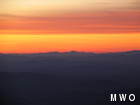
Camel’s Hump & Mt. Whiteface
If you come to the Observatory on a typical day, you’ll find two or three observers, an intern or two, a volunteer or two, and maybe a museum attendant, depending on the time of year. However, this past Wednesday and Thursday, the entire crew was up overnight. That included five observers, two interns, a couple of Snow Cat operators, Ken, and a volunteer. The occasion? Wilderness First Aid Training. Over those two days, we all participated in a crash-course in basic Wilderness First Aid. We all got tons of practice in patient examinations, splint-making, and what to do in specific emergency situations that may arise in our time on the summit. Very rarely, if ever, is everyone from both shifts together on the summit overnight, so it was a special occasion. Working opposite shifts doesn’t allow members of one shift to spend any appreciable time with members of the other shift. As you might imagine, the kitchen was filled to the brim at lunch and dinner time, and the living area was much louder and more dynamic Wednesday night than most nights on the summit.
Thursday afternoon, the first aid training was completed, and the departing shift was able to get out of dodge (a day late). A few hours after their departure, those of us left behind were treated to quite a spectacle. As I was working in the weather room around 5 pm (EST), Brian called my attention to the sunset that was going on behind us. The colors were nice, but the most exceptional part of the show was the fact that some of the peaks that are typically only faintly visible and fuzzy to us appeared unusually clear and sharp. Pictured above is a photo from the sunset last night.
Camel’s Hump, which is about 80 miles west of the summit, appears as the most prominent peak in the center of the photo. The peak immediately to the right of Camel’s Hump is Mt. Whiteface, which stands 130 miles from the summit in the Adirondacks of New York State. Generally, this peak appears very faint and is usually the limit of our horizontal visibility. The extremely dry air provided there were no obstructions to our view, and the position of the setting sun lit up these peaks in an almost perfect fashion. The exceptional view capped off a hectic and unusual two days at the Observatory.
Mike Carmon, Summit Intern
Seek the Peak 2026: New Adventures, Rooted in Tradition
Seek the Peak 2026: New Adventures, Rooted in Tradition By MWOBS Staff Seek the Peak is Mount Washington Observatory's largest annual fundraiser, and for 26 years it's brought together hikers, adventurers, and people who
What “Prepared” Really Means in the White Mountains
What “Prepared” Really Means in the White Mountains Early Spring in the Whites: The Most Honest Season By Andrew Harris, Burgeon Outdoor If you’ve spent any time in New Hampshire’s White Mountains in March,
March on Mount Washington
March on Mount Washington By Ryan Knapp Looking towards Mt. Madison at sunset on March 21, 2026. The calendar has spoken: Friday, 20 March 2026, marked the first day of astronomical spring.