
While In The Fog…
2014-08-26 13:40:01.000 – Michael Kyle, Weather Observer


Short Range Visibility Markers
While most people want to come to the summit of Mount Washington on days where the visibility stretches on for 100 plus miles, those days can be pretty rare. Even during the summer when the weather is much mellower, phenomena like haze, smoke from distant forest fires, and low level clouds can dramatically limit visibility on the summit. The most drastic and common phenomena that obscures the visibility on the summit is fog. On average the summit of Mount Washington is in the fog for 60 percent of the year. Just because the summit is socked in the fog doesn’t necessarily mean that there is nothing to see.
When the summit is in the fog, great views can be seen during your travels up and down Mount Washington. Then, while you are on the summit, the views may vary from 1/2 of a mile down to 0 feet, but you can still see some of the unique alpine flora found on the summit, as well as some of the short range landmarks. Depending on the conditions, these landmarks can include Ball Crag and down into some of the surrounding ravines. In the picture above you can see some markers that can be used as a gauge to determine the short range visibility. As for the days when the fog is so dense that you cannot see much more then 10 or 20 feet, you can always head into the Sherman Adams Building and check out the new Extreme Mount Washington Museum
Michael Kyle, Weather Observer
My Fear of Weather Became a Love of Meteorology
My Fear of Weather Became a Love of Meteorology By Kaitlin Farrell Hello! My name is Kaitlin Farrell. I am one of the fall summit interns here at Mount Washington Observatory. I recently graduated
Ascending with High Winds
Ascending with High Winds By Alonso Lopez Hi! I am Alonso Lopez, one of four interns at Mount Washington Observatory from August to December, 2026. I was born and raised in the Dallas-Fort Worth
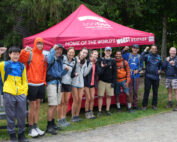
26th Annual Seek the Peak Recap
26th Annual Seek the Peak Recap By Drew Bush Members of the "Peak Potential" team gather at Pinkham Notch before hiking Mount Washington for the 26th Annual Seek the Peak. View more images. We’ve had