
168 Hours on Mt. Washington
2012-10-17 22:20:58.000 – Bill Ofsiany, Summit Volunteer

NULL
Over the past 50 years of hiking this area, summer and winter, Barbara Althen and I have probably been on the top of Mt. Washington about 30 times. Because it is the halfway point in a day hike, we only spent about an hour on the summit each time, before heading down. That hour was a biased one though, since we picked the day and the weather, be it July or January. This week, we lived up here, and were fortunate enough to be here during the transition period, where fall morphs into winter, and back again. Sure we were in fog a lot, but we got to see a sunset, and 120 mile visibility, during the day and at night.
We set a daily record low temperature of 7 degrees, and saw rime ice plaster every building white with ice feathers 20 inches long. We felt winds at 83 mph push us around. It wasn’t a Century moment, but it was impressive nonetheless. We saw crowds of tourists, and times when we were the only ones on the rocks. We got to see hikers coming up out of the ravines into snow, fog, and minus 10 degree wind chill. Most important, we got to meet a group of people who work for the Observatory, who love weather, and we got to be a part of their world for 168 hours. For that we thank you very much.
Bill Ofsiany, Summit Volunteer
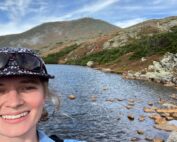
From One Mountain to the Next
From One Mountain to the Next By Ellie Derry Hi everyone! My name is Ellie Derry and I am one of the fall 2026 interns at the Observatory. I’m super excited to be here
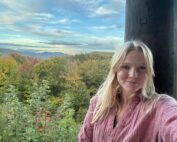
Mountains and Meteorology: What More Could a Girl Need?
Mountains and Meteorology: What More Could a Girl Need? By Emily Grainger Hi everyone! My name is Emily Grainger, and I am one of this fall’s Summit Interns atop Mount Washington! I’m from Orlando,
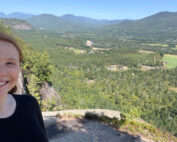
My Fear of Weather Became a Love of Meteorology
My Fear of Weather Became a Love of Meteorology By Kaitlin Farrell Hello! My name is Kaitlin Farrell. I am one of the fall summit interns here at Mount Washington Observatory. I recently graduated