
NULL
2009-10-04 15:11:07.000 – Stacey Kawecki, Observer

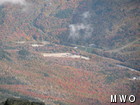
the view from above
Autumn is one of the most beautiful seasons, and its colorful display is created by nature’s necessity to survive winter. After a blooming spring, and a sun and rain kissed summer the deciduous trees start to prepare for winter. The trees, like bears, actually hibernate. Why, then, do we get a brilliant show?
Plants make their own food through a process called photosynthesis. During photosynthesis, chlorophylls in plants (usually in stems and leaves) combine water, carbon dioxide and solar energy to create sugar and oxygen.
6CO2 + 6H2O = C6H12O6 + 6O2
The green color of leaves during spring and summer is not the true color of the leaves. The presence of chlorophyll masks the true pigments. In the late summer, veins that act like the railroad industry, transporting nutrients to and from leaves via the stem, start to be less effective. A layer of cork cells begins to develop at the stem, limiting the flow of nutrients. In a sense it’s like a road that doesn’t get plowed in the winter; eventually it will be shut off, and no cars can get through. Eventually the cars that are there will run out of gas; that’s what happens to the chlorophyll. That’s when the carotenoids will be unmasked, revealing the bright oranges and yellows that are the true pigments of the leaves.
In addition to the flaming carotenoids, another kind of pigment called anthocyanins creates the red and purple foliage. These deep, bold colors are produced when phosphate moves out of the leaves, and the sugar-making process is altered. The conditions most conducive to the production of anthocyanins are cool, bright days and chilly, but not freezing nights.
Why do the trees shed their leaves at all? Well, there are many reasons for a tree to go into hibernation. Transpiration is when water is released through tiny openings in the leaves. A deciduous tree can use 90% of the water it gains in this process. It creates a gradient, so that water will be pulled up from the roots into the extremities of the tree. In the winter, the ground is frozen and water is scarce. If transpiration continued, the tree would become desiccated. The energy required to repair leaves is far more than to grow new ones. This process protects the trees from dying in the winter, when light is scarce and winds are strong. It is also thought that the colors warn insects. Regardless of why it happens, there is nothing more amazing than coming off a white, wintry mountain to the explosive and fiery colors of fall.
Stacey Kawecki, Observer

From One Mountain to the Next
From One Mountain to the Next By Ellie Derry Hi everyone! My name is Ellie Derry and I am one of the fall 2026 interns at the Observatory. I’m super excited to be here

Mountains and Meteorology: What More Could a Girl Need?
Mountains and Meteorology: What More Could a Girl Need? By Emily Grainger Hi everyone! My name is Emily Grainger, and I am one of this fall’s Summit Interns atop Mount Washington! I’m from Orlando,

My Fear of Weather Became a Love of Meteorology
My Fear of Weather Became a Love of Meteorology By Kaitlin Farrell Hello! My name is Kaitlin Farrell. I am one of the fall summit interns here at Mount Washington Observatory. I recently graduated