
Rain, sleet, 100 mph winds, and lightning… at the same time!
2008-04-02 01:11:24.000 – Matthew Morin, Space Grant Intern

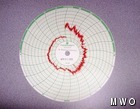
Hays chart
At 15 minutes before the synoptic hours (00:00, 06:00, 12:00, and 18:00 UTC), the observer must retrieve the precipitation can in order to measure the 6-hour accumulation. This task, normally simple during the warm season, is often times difficult and somewhat risky this time of year due to icy conditions and high winds. Today we had both, but to a greater degree than usual.
Spring is a “transition” season where there are frequent clashes of warm and cold air masses occurring in the Northeast. The low pressure systems that drag these air masses tend to thrive off of such unstable conditions and intensify as they track across our region. As their central pressure lowers, the surrounding pressure gradient tightens and high winds flow across New England. Northern New Hampshire’s topography often directs and focuses the flow right over the summit of Mount Washington, resulting in our famous high winds.
A warm front associated with a low pressure traveling northeast from the Great Lakes region brought warm south winds to the summit today. Rain and temperatures in the upper 30s melted snow and created large puddles around the observatory. With the low departing into southeast Quebec, south winds shifted west which is indicative of an approaching cold front. Freezing temperatures will turn the slush and puddles to ice which, in combination with the high winds, will make the hike to the precipitation can somewhat dangerous. Currently at midnight EST, the winds are sustained at 92.3 mph with gusts over 100 mph. The temperature is 19°F and falling rapidly while glaze ice coats everything on the summit. Earlier this evening, the summit experienced its first thunderstorm of the season! Lightning was first observed at 7:37 PM EST. With the night observer’s safety in mind, I will be staying up past 00:00 UTC (1:00 AM EST) to accompany him as he ventures outside to retrieve the can. These types of adventures in this type of weather make me love my job more and more with every week-long shift atop this awe-inspiring mountain.
The photo in this comment is a picture of today’s Hay’s chart showing the 100 mph winds occurring at the end of the day around midnight.
Matthew Morin, Space Grant Intern
From One Mountain to the Next
From One Mountain to the Next By Ellie Derry Hi everyone! My name is Ellie Derry and I am one of the fall 2026 interns at the Observatory. I’m super excited to be here

Mountains and Meteorology: What More Could a Girl Need?
Mountains and Meteorology: What More Could a Girl Need? By Emily Grainger Hi everyone! My name is Emily Grainger, and I am one of this fall’s Summit Interns atop Mount Washington! I’m from Orlando,
My Fear of Weather Became a Love of Meteorology
My Fear of Weather Became a Love of Meteorology By Kaitlin Farrell Hello! My name is Kaitlin Farrell. I am one of the fall summit interns here at Mount Washington Observatory. I recently graduated