
A shared sunrise.
2007-08-05 05:25:12.000 – Ryan Knapp, Meteorologist

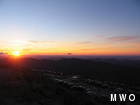
Sunrise, a shared experience.
Sunrise, it’s a time of solitude, tranquility, and awe most mornings. But this morning, I got to share the experience with those fortunate enough to drive up the auto road in time. Sunrise was at 0530 EDT (0430 EST or as we like to call it, obs time) and it could not have been better. Visibility was a bit over 120 miles in every direction with just a few clouds in the sky to provide some color. The only dust on this gem of a sunrise was the temperature of 37F and a wind chill of 23F. But those who were eager enough arrived in droves bundled in hoodies, coats, and blankets to see the highest sunrise in the northeast. To give you an idea of what they saw, let me show you what I captured.
Picture 1 – a view from the parapet.
Picture 2 – seconds before the sun came up.
Picture 3 – a view from “under” the building.
Picture 4 – reflections of a sunrise.
Picture 5 – a golden view.
The last two days were very picturesque as well, but not for sunrises, more for the cumulonimbus clouds that formed around the summits. Now for a science lesson: A cumulonimbus clouds (or CB as weather observers call them) are a genus of dense clouds with a low base that extends vertically to a great height, sometimes reaching all the way to the tropopause. It forms in towering shapes and usually has a smooth, flattened top marking the level beyond which air is unable to rise by convection. These types of clouds usually carry heavy precipitation and are associated with thunderstorms. This was most certainly true the past few days.
The first one that was clearly seen was on Friday afternoon when a thunderstorm passed just north of the station and the fog opened up briefly. These thunderstorms continued into the night with additional viewing windows in the fog. The lightning was flashing like the bulbs on the cameras of the paparazzi. I felt like such a celebrity. As Brian mentioned yesterday, I tried to take a picture of them but had no success, so sorry.
The second one that was seen was yesterday over Maine about 50 to 60 miles to our east. It was well defined and with great visibility, the CB in its entirety was captured. Being daytime and so far away, we could not make out any lightning, but the Doppler radar we use was showing plenty of strikes. Beautiful from a distance but dangerous to those stuck under them. But all in all, the past three days have been busy in their own right but we found time to enjoy what we saw. Who else can say that about their jobs?
Ryan Knapp, Meteorologist
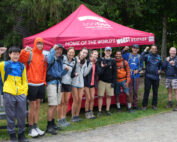
26th Annual Seek the Peak Recap
26th Annual Seek the Peak Recap By Drew Bush Members of the "Peak Potential" team gather at Pinkham Notch before hiking Mount Washington for the 26th Annual Seek the Peak. View more images. We’ve had
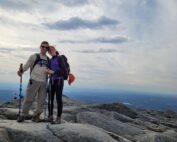
Seek the Peak Spotlight: The Cloud Chasers
Seek the Peak Spotlight: The Cloud Chasers By MWOBS Staff Mike Bergeron and Desiree Bolton have been participating and volunteering for Seek the Peak for three years now. Together, they comprise Team Cloud Chasers
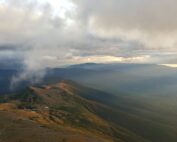
Celebrating 250 Years: The Declaration’s Legacy in the White Mountains
Celebrating 250 Years: The Declaration's Legacy in the White Mountains By Peter Crane We are now approaching July Fourth, Independence Day, the day when we celebrate the adoption of the Declaration of Independence in