
Foggiest Places on Earth
2014-03-08 21:18:24.000 – Tom Padham, Weather Observer/Meteorologist

NULL
After spending a few days in the clear, the summit has returned to the all-too-familiar foggy conditions we see so often up here. Being back in the fog made me wonder, how does Mount Washington compare to some of the foggiest locations on our planet? After doing a bit of research, it seems we may be right up there with many of the foggiest places on earth. According to most sources, the Grand Banks off the southeast of Newfoundland, Canada are considered by most to be the foggiest place on earth, with an average of 200 or more days spent in the fog each year. The Grand Banks are in all likelihood not the foggiest place on earth, but perhaps the foggiest place on our planet that is largely inhabited.
A major reason for the Grand Banks being so foggy is their location near the confluence of the cold Labrador current flowing south from the arctic and the much warmer Gulf Stream current flowing north from the gulf coast. Mountains tend to be very foggy places due to adiabatic ascent, where warmer air from low elevations is forced to rise up and over the mountains, which cools the air to its dew point and produces clouds that cap the mountain peaks. Mount Washington is often cited as spending 2/3rd of our days in the fog, which equates to about 240 days, however there are likely many mountainous locations that experience a similar amount of days in the fog, if not more than we see up here on the summit. Most of these locations are uninhabited, and therefore data on their average annual foggy days is unknown. Still, it is rare for Mount Washington to go a few days without any fog at any time of year. Therefore, in closing, Mount Washington may actually be right up there with some of the foggiest locations on earth, and a day in the clear up here is something that should be enjoyed!
Tom Padham, Weather Observer/Meteorologist
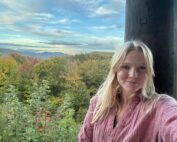
Mountains and Meteorology: What More Could a Girl Need?
Mountains and Meteorology: What More Could a Girl Need? By Emily Grainger Hi everyone! My name is Emily Grainger, and I am one of this fall’s Summit Interns atop Mount Washington! I’m from Orlando,
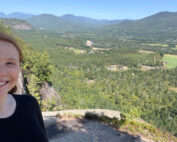
My Fear of Weather Became a Love of Meteorology
My Fear of Weather Became a Love of Meteorology By Kaitlin Farrell Hello! My name is Kaitlin Farrell. I am one of the fall summit interns here at Mount Washington Observatory. I recently graduated
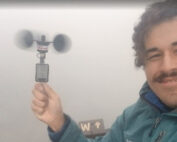
Ascending with High Winds
Ascending with High Winds By Alonso Lopez Hi! I am Alonso Lopez, one of four interns at Mount Washington Observatory from August to December, 2026. I was born and raised in the Dallas-Fort Worth